

Scoring 65 Never Looked So Good
An Open Letter to High School Students in New York State
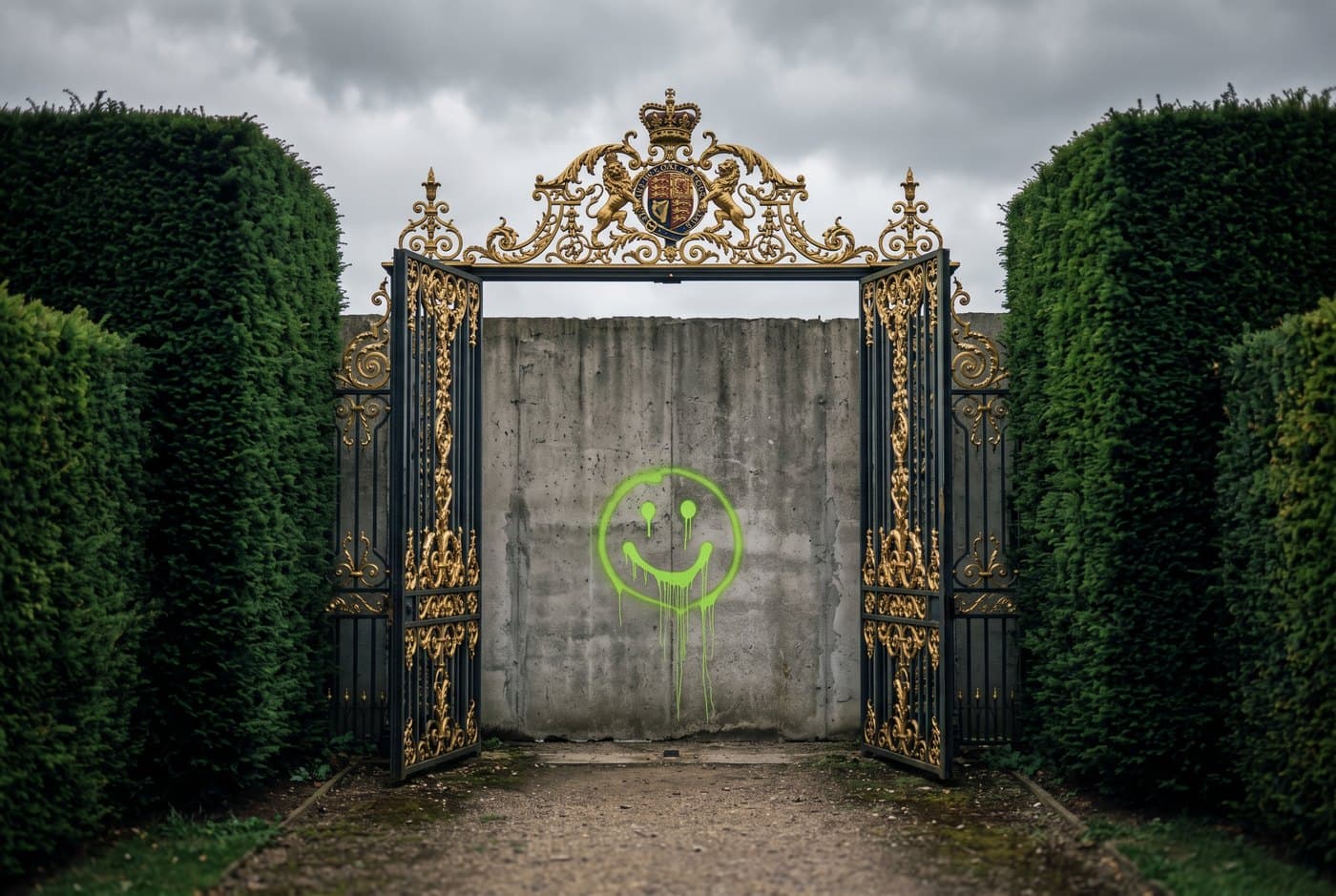
High school seniors, you know the room. Fluorescent light. Carpet that belongs in an office. A packed schedule of Saturdays. A bright young stranger, too young to be a teacher, at the whiteboard teaching you tricks for a test you have to ace. You learn to cross out wrong answers. You learn to guess well. You learn nothing you care about, because informed guesswork is the shallowest kind of learning there is. And somewhere in the back of your mind you are picking up something worse. You are learning that this is what school is. That school is a score. And if that is the whole game, maybe you already decided it is not your game to play. Do not believe the lie. Demand more than a score.
Let's go back to the start. A test is not your enemy. A test is a ruler, a tool that measures what you know. That is all it was ever built to do. The crime is that somewhere we started teaching to the test. It is like eating the menu instead of the meal. A test shows you can read the menu, that you know what a unit has to offer. But reading is not eating. You still have to order the one dish that pulls you in and go deep. We have been handing students the menu and calling it dinner. No wonder so many forgot what real learning tastes like.
A teacher has every right to measure what you know, and cramming the days before a unit test is an old and honest tradition. But a test is a gateway, not a destination. Take the test. Get the score. Then go do real work, with real feedback, and fix it and do it again, until even you are satisfied. You are your own toughest critic.
Here is a more useful way to picture the role of a test. A test is the weight room. Nobody wins the Super Bowl or the World Cup in the weight room. You lift so you can play the game you love. For too long, school has kept you lifting and never let you onto the field. Flashcards are fine for the test. But a word only sticks when you use it, when you say it out loud to an expert who knows the field. A test measures what you know. It cannot measure what you can do with what you know.
The game is the question no one assigned that would not leave you alone. The project that started as a distraction and took over. The paper you kept because you were proud of it. The thing you make because you cannot help making it. That is the point of a unit. The test is the smallest part. It is packing your bags and reading the guidebook. It is not the trip itself.
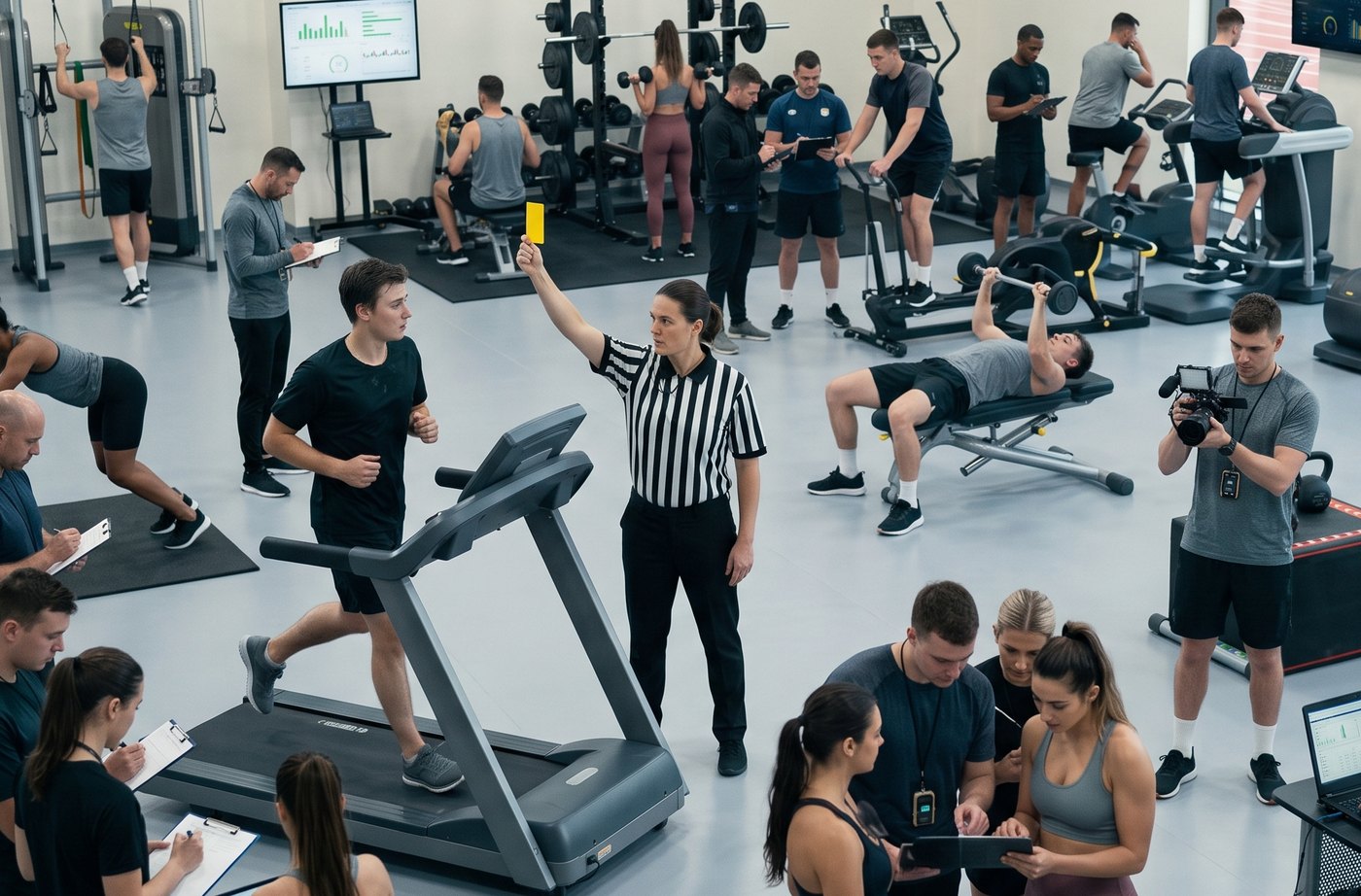
And not every unit has to be publish-worthy. You get only ten spots on your HScred CV to show colleges, and they may not even watch half of them. They do not have to, because three experts already reviewed and approved the work.
Here is a wild idea. Move the final exam to the first day of the unit. Get it over with. Some students will pass on day one, and they should be free to dive straight into project work. Repeat after me: a test is a gate, not a destination. Once that clicks, pass or fail makes much more sense than some random number like 76 or 97. Too much effort goes into specificity that doesn't even matter. All that matters is that you are ready to dive deep in an academic subject to produce an outcome, a work product.
Think about it. Either you are ready to start the real work or you are not. You will pick up plenty more knowledge once you start digging into your topic. How high you cleared the bar to get in does not matter. It may sound crazy for an educator to say, but a 65 is the perfect score. It proves you understand the basics well enough to begin, and beginning is the whole point. Everything that teaches you comes after: a real project, a real deliverable, and round after round of feedback and revision. Let's go.
Right now most students sit bored for weeks and cram at the end, the sharpest hours of your mental life burned on spinning a pen out of boredom. Plenty of these students already study hard at home. They come to school for their friends, and then sit through weeks built for no one.
So flip it. Cram first, take the test when you say you are ready, pass, then spend the days you saved building something you will never forget. Something worth getting frustrated over and not stopping. Resistance training for your brain feels like frustration, and that is the point: when you get frustrated and fight through, you never forget what you learned. It is quite literally addictive. The brain's reward system runs on dopamine, released like a drug every time you overcome an obstacle and learn something new.
That feeling of frustration and then elation is what locks the memory in so you never forget that kind of learning.
Now the part almost no high school student knows. In New York, the gate is open. The Board of Regents is phasing out the old Regents exams as the thing you must pass to earn a diploma. They were the gate that stood at the end of high school. They call what comes next the Portrait of a Graduate: a way to show what you can do instead of what you can bubble in. As soon as fall 2027, a New York diploma can rest on real work instead of one exam in June. All those weeks burned on the May review and the June Regents, (not to mention January and August) handed back to you, to make work that carries your voice. So get your camera out instead of your number 2 pencil, because edited video can now count toward your New York State diploma.
That gate has remained locked for over 160 years, since the Regents exams began. If you are in early high school now, you are part of the small group standing exactly where the rules are being rewritten, and not only at the elite schools. For everyone. That is the hope. It is not a promise. For one narrow window, while the ink is still wet, you get to choose what comes next. Because heaven knows the adults do not know what is possible with a camera, some mental muscle, and a passion for learning.
An open gate is not the same as walking through it. Nobody will carry you. The old way is familiar, and familiar is comfortable, and comfortable creeps back the second we stop watching. Your school may still point you at the Regents or the AP exams because they are easy to schedule and everyone knows them. The Regents are soon to be optional. It is your right to know you have a choice.
And if you choose AP, here is something even College Board makes clear: AP does not have to mean a multiple-choice test. College Board built projects and performance tasks into AP on purpose. Its own documentation says several AP courses include through-course performance tasks, in place of or alongside the multiple-choice and free-response sections.
Look at AP Research. Students spend a year investigating a question they care about, write a 4,000 to 5,000 word academic paper, present their findings, and defend their work out loud. There is no end-of-course written exam. None. The paper is 75 percent of the score, and the presentation and oral defense are the other 25. The entire AP Research score comes from work you build and stand behind. AP Seminar runs on the same idea. So does the student-built program in AP Computer Science Principles and the portfolio in AP Art and Design. College Board calls these what they are: evidence of student learning.
That matters. The people who make the AP exams have decided that sometimes the best evidence of what you know is not an answer you circle in a testing room. It is something you research, build, write, perform, present, and defend. So take the AP exam if you want to. Pass it. Earn the college credit. Then publish the project behind it on HScred, so colleges get your AP score and the behind-the-scenes cut of what you overcame to earn it. Even AP has figured out that learning must be bigger than the exam. The best way to stand out in a sea of students earning AP credit is to get published so colleges can see for themselves what you actually achieved.
You will have to know enough to say no to being represented by a score alone, unless that score is backed by real work and a fair way to judge it. You are more than a test can hold. And you will have to know enough to also say yes. Opting out is pointless if you do not opt for something better. Ask for projects. Ask to be measured by a portfolio of your best ones. HScred is built for exactly that, especially if you already make videos. Now make one built to count for college.
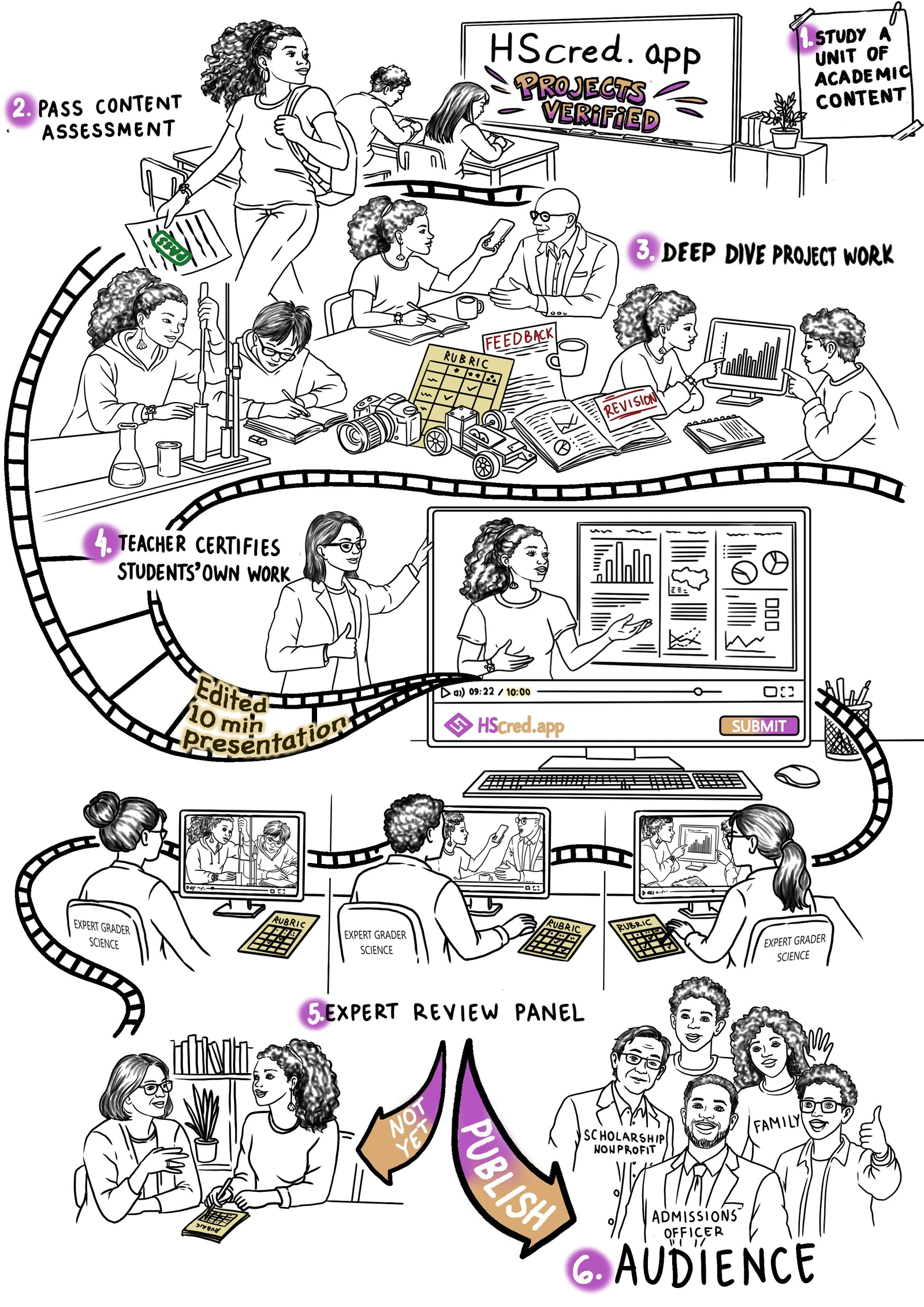
Take the thing you are proud of, the research, the code, the reporting, the argument about your own block, your dance, and record ten minutes where you stand behind it and defend it, the way a scholar defends real work. Film a poster-board talk and narrate it. Whatever you can imagine. Three experts who know the subject review it against a public standard, the same way they review each other. If it holds up, it gets published, and it becomes proof that belongs to you, proof you can send to any college in the country. Video recording, editing, and distribution have brought the referee onto the field. A student in rural Mississippi gets the same expert audience as a student at an elite private school. On HScred, the school you attend does not matter. Your location does not matter. The work is all that counts, and behind it a real audience of experts, and then admissions officers and the community at large via both hscred.com and hscred.app/showcase.
You fall in love with learning when you make something worth publishing. You fall out of love with it during test prep. Some test prep is needed. Not a childhood of it. One asks for your voice. The other asks for your silence. One grows out of your block, your culture, your own questions. The other is handed down by a faceless authority that moves the goalposts to serve itself. Your brain pays you every time you learn something real. It always has, that's how you learned to first walk or talk.
Here is the part that should make you angry. In the elite schools, students spend the year making things. They run experiments, build arguments, shoot films, and defend their work in front of people who ask hard questions. In most other schools, students drill for a test. They learn to sit still and repeat. Same minds, two different futures, and the only thing that chose between them was what the adults decided to measure. If your school has less money and less power, you are served a plastic menu instead of a real meal. Test after test after test. Your questions go unasked. Your culture, the real engine of every new idea, gets treated as a distraction. Nobody tells you to go ask your godmother what she knows and build something out of it. I wrote about that divide in The K-Shaped Classroom, and about how AI is about to make it worse in A Perfect Test. The short version: the student taught to create will use AI to go further, and the student taught only to drill will use it to stop thinking. Same tool, opposite outcome.
College Board's own student documentation says "the SAT should not be used as the sole source of information for high-stakes decisions." That is not me talking. That is College Board. Its technical documentation goes further: SAT benchmarks are not meant to restrict a student's access to challenging coursework or to discourage a student's aspirations for higher education. The company that makes the test is telling schools not to let the test decide your life. I second that motion.
The same turn is happening on the government side. The Board of Regents is giving New York the chance to grow beyond standardized testing. Read the Portrait of a Graduate closely and you will find a set of rights, handed to you without anyone saying so out loud:
- Make real work, and be judged on it.
- Never be reduced to a number that no real work stands behind.
- Your own voice, your own questions, your own culture.
- Fail, as long as you keep trying hard things.
- Time to use what you learned after the test is over.
- The same kind of record no matter which high school you attend.
- Coming soon: the right to say no to a make-or-break test whenever you are willing to show real work instead.
And a right you do not use is just words on a page.
Some tests are still required, like the SHSAT for New York City's specialized high schools, and plenty of families love AP courses for the college credit or a place in a specialized program. Take them. Pass them. Passing a hard test is never a bad thing. It just cannot be the last thing. Then go further.
Publishing on HScred never costs you anything. Each piece of work costs $100 to evaluate, and a school, a district, or a sponsor covers it. If nobody has covered yours, choose the scholarship option and our nonprofit partners take it from there. Quality academic work gets matched with a scholarship. There may be a short wait when the queue is full, but we built it so that money is never the thing that keeps anyone from publishing.
Back before we had a platform or a single published video, we picked three words and put them on everything. Passion for learning. It is how we built this company from nothing. We learned. We pivoted. We danced. We met every wall with curiosity instead of fear, and we turned it into a hashtag, #PassionForLearning, and meant every letter. Frustration welcome. Tensions explored. Not passion for grades. Not passion for getting in. Not even passion for a successful future. Passion for the thing itself. Passion for getting frustrated enough to understand how the world actually works.
So open hscred.app and look around. Find the subject you love. If there is a channel for it, you are halfway home. If there is not, that is not a wall, that is your mission. Every channel is opened by a university professor, it takes about thirty minutes, and it can earn their department real money. Think of a professor you admire, one nearby, a friend of the family, the one whose talk you still remember, or ask a teacher or your principal to make the introduction. Tell them the truth: one short conversation opens a channel, and once it is open, their department gets paid to review real student work. Then find one teacher at your school to be your Guide, to push your drafts and vouch that they watched you struggle and push through. Make your video. Publish it. Do it again, up to ten times, and watch a portfolio grow with your name on it. Then bring a friend. A movement spreads one student at a time.
If you are already a senior, but you are thinking about community college for an associate degree on the way to a four-year college, you can start your portfolio now and build it all the way until your transfer application to the four-year institution. It's never too late to start getting your work published. You can share it with future scholarship and even job opportunities. Having work you are proud of available to share and in video format will add resolution to a flat resume.
And know this. If students keep choosing the Regents even when a real alternative exists, the next Board of Regents will bring the old testing mandate back, and they will have their proof. They will say students would not build anything real, so the test is the only fair choice left. They will say you are scrollers, not creators. Do not hand them that story. The Board is doing a brave and rare thing, and they cannot do it alone. Fill the new path with work so real and so good that going back becomes unthinkable. Because if you sit still, if you shrug, if you take the familiar test one more time because it is what everyone does, the window closes and the ruler runs the house again, for another generation of kids who came to school chasing what they love and got told to sit still and be quiet.
So do not sit still. Stand up. This is not a petition and it is not a protest. It is you, and the student beside you, and the one beside them, all saying the same small word to the make-or-break test.
No.
Not anymore.
Not to us.
Make the video. Publish the work. Ask the professor. Teach the kid next to you the rights you both have starting next year, and claim every one of them, and refuse, happily, to hate learning any longer. Then teach us. There is so much you understand about this world that we never will. I am counting on you.
Show colleges your true colors, in high resolution.
Students are the VIP Investor Class of #AcademicCapital on HScred. Your individual #PassionForLearning defines each channel. HScred lets colleges #ListenToTheYouth