

Our AI Problem Is Older Than AI
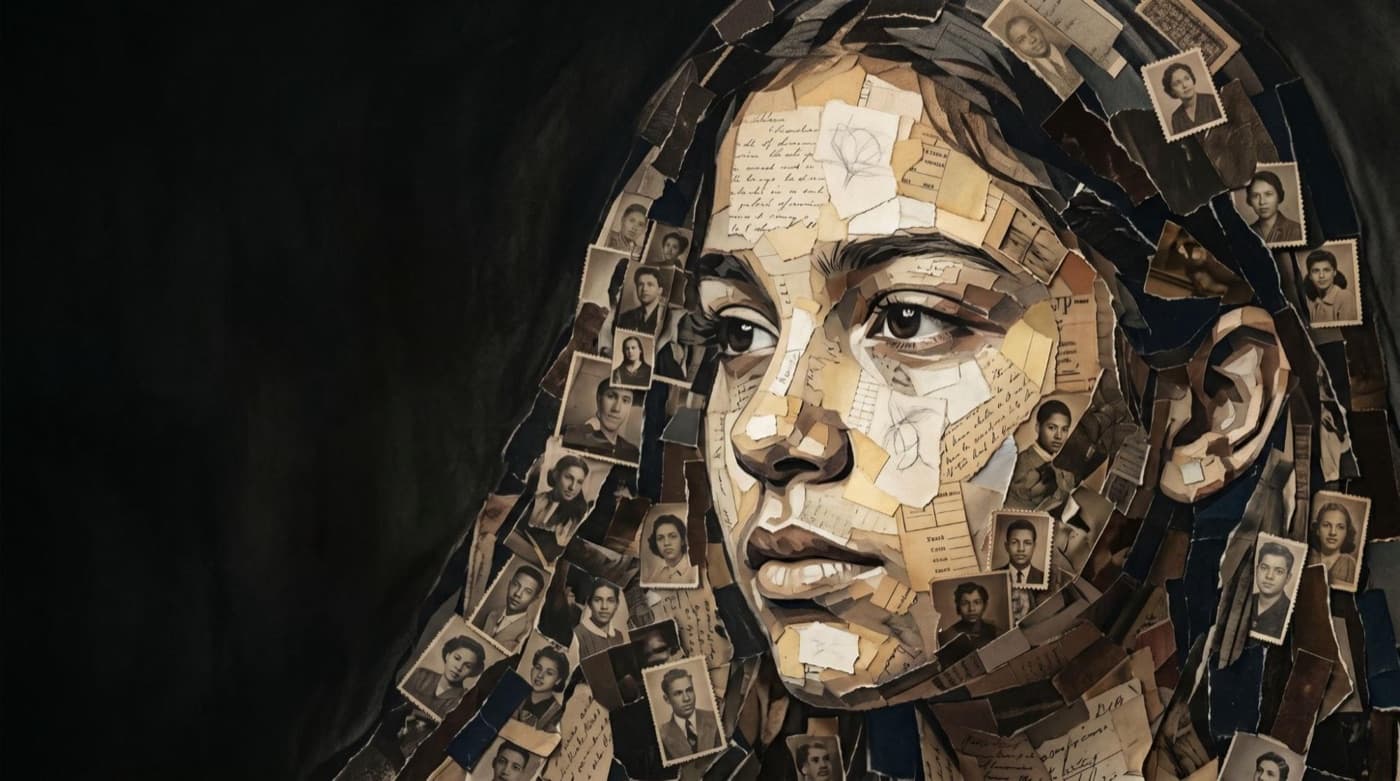
The K-shaped education landscape is why the same AI is making one student brilliant and another helpless.
Earlier this year, MIT researchers wired students to EEG machines and watched their brains while they wrote essays. One group used ChatGPT. That group showed the lowest brain engagement of anyone in the study. They "consistently underperformed at neural, linguistic, and behavioral levels," the researchers wrote. They got lazier with each essay, copy-pasting by the end. And when asked to quote a single line from the essay they'd just submitted, many couldn't. Two teachers who graded the work called it "soulless."
So is AI good or bad for kids?
Wrong question.
AI isn't good or bad for learning. It's an amplifier. The only thing that decides whether it makes a student sharper or duller is the assignment.
Cognitive offloading
Hand a kid a worksheet, or "list the causes of World War I," or the questions at the end of a chapter, and watch. They paste it into a chatbot. Clean answer, four seconds, zero learning — worse than zero, because the whole point was to make them do the cognitive lifting, and they just handed it to a machine.
Psychologists call it cognitive offloading. Your phone already did it to your sense of direction; you haven't truly memorized a route since GPS. Now aim that same force at a generation's reasoning abilities.
And it's everywhere. More than half of American teenagers (54%) now use AI for schoolwork. Three years ago it was 13%. It has quadrupled, and it is not going back.
Instead of that worksheet, give the same kid a challenge to perform or create or organize an event. Model a real problem. Make an argument about a war happening right now and defend it to a room that disagrees. The same AI flips polarity. It becomes a tutor that never tires, a research assistant, a sparring partner, a secretary for the boring parts. The student spends their energy on the hard, human part: the thinking, the judgment, the defense.
That's not cheating. When chess engines got strong enough to beat any grandmaster, the best players on earth stopped being humans or computers; they became humans teamed with computers. Garry Kasparov named them centaurs. Give a kid work worth doing, and AI makes them capable of things that were impossible a year ago.
An old divide, newly accelerated
This is not a new divide AI created. It's an old one AI is pouring gasoline on. Before AI, students were taught to take tests while others were taught to do complex, real-world thinking with hands-on projects. The tests are a memory game in a world where memory is free. Factory-style education wasn't interested in deep independent or creative thinking.
The numbers were already moving before ChatGPT existed. Public schools have lost more than a million students since their 2019 peak. Over the same stretch, private-school enrollment did the opposite — climbing toward 7 million, roughly 22% above pre-pandemic levels. The families who could afford to leave, left. And the schools they left for had quietly abandoned the worksheet years ago — projects, portfolios, seminars, defend-your-thinking classrooms — while the public system, squeezed and accountability-whipped, doubled down on more testing than ever before.
This is the K-shaped classroom I wrote about: one track of students learning to create, the other learning to consume, and the middle pulling apart. Deeper learning for the few; drill-and-test for the many.
Then AI walked in and handed a superpower to the side that was already winning, and a crutch to the side that was already losing. The gap that took twenty years to open will widen in twenty months.
Where a ban is right, and where it isn't
This week The Daily spent an episode on exactly this. Natasha Singer reporting on "the year that reshaped American classrooms," and the first half is a horror story. One mother testified that the first song her kindergartner learned to sing at school was an ad for the AI app Grammarly. Teachers grading work no human wrote. A whole profession ambushed mid-semester. If that's all you heard, banning the technology sounds like the only sane response.
For the youngest kids, it is. The American Federation of Teachers now says no screens through second grade and no chatbots in elementary school, and they're right. A nine-year-old hasn't yet built the reading, writing, and reasoning that AI is so eager to do for them. Hand a child the crutch before the muscle forms and the muscle never forms. K–8 should ban it. Full stop.
But a ban is a tourniquet, not a cure. It buys time; it doesn't answer the question these same students face away from school when their parents give them screen time. And by high school the question has changed. You cannot ban the tool these kids will likely use in every college course and every job they'll ever hold. Ban it there and you don't protect them; you just send them in defenseless.
The ban treats the symptom. The disease is older: an assignment that was always safe to outsource, a factory-model school that rewarded compliance over thinking long before a chatbot could finish the homework. AI didn't create that. It just made it impossible to ignore.
The machine loses its last gauge
The machine held for 160 years. AI is what finally breaks it.
Look at the college essay. As standardized tests fell out of favor and 90% of four-year colleges stopped requiring them, the essay took on more and more of the weight. Then ChatGPT arrived and turned the essay into noise. That sounds minor until you sit in an admissions office, where the essay was the last shared signal — the only way to compare a student in rural Ohio with a student in Queens across 27,000 different high schools. Now that signal is gone too.
You would think that going from a world where only the wealthy could afford private college essay coaches to one where every child has an infinite, tireless coach in their pocket would be the great democratization of American education. It should have leveled the playing field. Instead, it exposed the foundation. We had built an entire academic meritocracy on the back of the take-home essay, assuming it was a window into a student's ability to write, at a minimum. When the cost of producing that essay dropped to zero, it didn't just become accessible; it became meaningless noise.
The very tool that promised to democratize access to high-quality writing ended up breaking the system's ability to see the scholar.
New York moves first
New York moved first. This week the state took its next step toward scrapping the time-based, test-based diploma and building a competency-based one in its place. Graduation by demonstrated readiness: evidence of real work, gathered over time. The Board of Regents says it is moving away from seat time and standardized test compliance toward what students can actually do.
No state has done this before. It is not a charter experiment or a private-school pilot. It is the public system itself, rewriting its definition of an educated person for the first time since it gave the first Regents Exam 160 years ago. The state is leading, and the colleges are begging it to.
Districts don't have to guess how to build this future; we already have the blueprint in student newsrooms. Shifting from high-stakes testing to digital portfolios requires the core skills of a journalist — reporting on one's own learning, verifying claims, and shaping a narrative. When we abandon the static, pen-and-paper essay for a real-world project, "literacy across the curriculum" evolves into "journalism across the curriculum." This approach doesn't just teach students to document their thinking; it gives schools a clear, actionable roadmap to move from passive test-prep to performance-based assessment that can be independently validated.
One question to ask of any assignment
You do not need a state to follow the same logic. You can use it today, whether you run a district or help with homework at the kitchen table. Ask one question of any assignment.
Can a student hand this to AI and learn nothing?
If the answer is yes, the assignment is no longer neutral. It is a liability.
Even teenagers feel it. Most say using AI for research is fine. Only 18% say the same about essays. They already know the difference between work that builds something in them and work that just disappears into a machine.
The teacher at the heart of that Daily episode built his whole class around exactly this. Scott Kern, who teaches AP US History at North Star Academy in Newark, calls it "driver's education for AI." His rule is simple: the AI stays out of the moments of productive struggle — the friction where the learning actually happens. But it is welcome everywhere else.
He even built a debate bot that refuses to hand over answers; instead it pushes back. A student argues the cause of the Chicago race riots, and the bot asks: What's your evidence? What's your primary source? What was happening in the rest of the country? Ten minutes later the laptops close and the kids argue it out themselves.
His seniors don't leave afraid of the tool, and they don't leave dependent on it. As one of them put it, you have to approach AI with a purpose, "otherwise AI will drive me, and I won't drive it."
They're not passengers. They're driving. That's the assignment worth giving, and it's the opposite of a ban.
The technology is neutral. Our choices are not.
Right now, assignment by assignment, classroom by classroom, we are deciding whether AI hollows out a generation or hands them a superpower. New York just decided to stop pretending the old answer still works.
The rest of the country will have to decide too.
Nadav Zeimer is a former NYC turnaround principal and founder of HScred, Inc.
#PassionForLearning #AcademicCapital #ListenToTheYouth