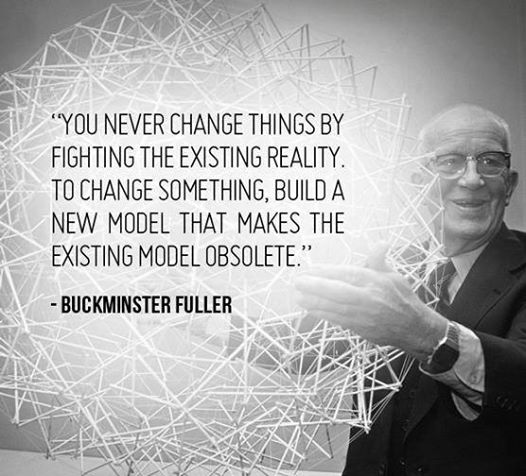
Last week was about silence. A platform goes live and nobody's there yet. This week is about the twenty-six years before that silence — and why the journey to get here wasn't a pivot, or a straight line, or a plan. It was a pirouette.
Silicon Valley loves the word "pivot." It sounds clean. It sounds strategic. You were going north, now you're going east, and the board approved the change in a Thursday meeting. That is not what happened to us. What happened was something dizzier — sometimes graceful, often stumbling, always spinning across a dance floor crowded with the ghosts of dead startups and good ideas that never found their users. A pivot implies that the new direction is constant, settled. Our experience was of constant change, often revisiting the same decisions multiple times and making different choices each time. Iteration is not a straight line.
We first thought it would be elite high schools who would be our academic partners. Then universities. Then back to schools with project-based learning. Then perhaps podcasters or textbook authors would provide the first teams to evaluate student content for publication. Then back to university professors, specifically.
We called student output "credits." That was the original language. It made perfect sense to me — I'm a former high school principal, and credits are the currency of that world. Professors heard "credit" and immediately thought of registrars, transfer agreements, institutional liability, comptroller offices, general counsel. They heard us asking for something that required permission from their entire bureaucratic apparatus, and they started shaking their heads before we'd finished the sentence. Google categorized us alongside financial institutions. Our first donor complained about the scam-adjacent search results that popped up around our original name and domain hs.credit. We were drowning in a word. Pivot. Round-and-round.
One afternoon, mid-conversation with a professor who was genuinely trying to understand what we were building, I reached for an analogy from her world instead of mine. I said it acts like an academic journal. You set the criteria. You recruit reviewers. You evaluate work. You publish what meets the bar. She started nodding. That nod — from one professor in one meeting — changed everything. Not because we pivoted. Because we listened. We heard what the dance floor was telling us, our ancestors of apps that are no longer, and we adjusted our next step, as we had done with the one before. Change was constant and destabilizing. Two steps forward, and we found ourselves already back to where we started. Many early team members lost faith because they got dizzy with this state of constant change. They craved answers. Clarity. That would take time. Twenty-seven years.
If you want to understand how much the footwork changed, consider the first edition of my book, Education in the Digital Age, which described a model built on "gatekeepers" — experienced teachers who would anonymously evaluate student uploads the way bitcoin miners verify transactions on a blockchain. Proof-of-work. I imagined a triad of roles: "gatekeepers, catalysts, and creators." Students were the creators, uploading podcasts and videos. Teachers were catalysts, guiding them through revision. And gatekeepers — teachers who had spent seven years proving their judgment as catalysts — would anonymously award or deny what I called "DNA credits," Digital Native Academic credits, earning cryptocurrency for their labor. I described a GitHub-style open source repository where educators would fork and refine academic rubrics the way software engineers iterate on code. I imagined a basic income guarantee for top-performing students, funded by converting academic capital into digital cash. I even wrote, with what I thought was charming self-awareness, that my extrapolations were "likely embarrassingly naïve" and invited others smarter than me to contribute corrections.
They did. Reality did. The dance floor did.
That vision was sincere. Every word of it came from a genuine belief that decentralized technology could liberate student work from the corrupting grip of institutional politics. But it was wrong in almost every structural detail. The blockchain was a solution looking for a problem we could solve far more simply. The gatekeeper model asked teachers to do the work that university professors were far better positioned to do — and far more willing to do, once we described it in language they recognized. The cryptocurrency incentive structure was a distraction from what actually motivates academics: the chance to define criteria in their field and put their name on the result. The seven-year apprenticeship was an obstacle dressed up as quality control. What survived from that original vision was the part that mattered most: that student work should be evaluated independently, by people with subject-matter expertise, against transparent criteria, and that the result should be portable and permanent. Everything else — the blockchain, the basic income, the gatekeepers, the DNA cash — fell away as we spun across the dance floor and listened to the people we were actually trying to serve. In the end we arrived at something rather simple: peer-reviewed publication for high school students.
The gatekeeper became an Editor. The anonymous evaluators became an Expert review panel. The DNA credit became a transcript of published work on HSCred. We stopped sounding like a blockchain whitepaper and started sounding like what we actually are: a platform where the academic work of high school students gets published after evaluation by university appointees. The language shift wasn't cosmetic. It dissolved legal barriers that had been blocking adoption for months. Professors could now participate in their individual academic capacity — the way they already review manuscripts for journals, evaluate grant applications, serve on editorial boards — without asking anyone's permission. List your affiliation, not your institution's endorsement. Familiar. Dignified peer-review practice. Immediately legible to every academic on earth.
I tell you this not to celebrate our cleverness. We weren't clever. We were stubborn, and we got lucky that stubbornness eventually turned into listening. The history of this company, if you read it honestly, is a history of mistakes corrected just barely in time. Of language that didn't work until it did. Of partnerships that almost died in hallways and then came alive in a single conversation. Of a team that includes people on two continents who decided independently that this matters enough to keep going when the sensible thing would have been to stop.
The pirouette has a quality that the pivot lacks: you end up facing the same direction you started, and you are dizzy with change. We never changed what we were trying to do. From the first day, the vision has been the same — build infrastructure so that excellent student work can travel with credibility, evaluated by decentralized experts, independent of any single institution's approval. What changed, over and over, was how we described it, who we asked to do it, and what we called the pieces. The music was the same. The footwork was improvisation from moment to moment.
And now the spinning has slowed enough for us to look our partners in the eye and see who is moving with us.
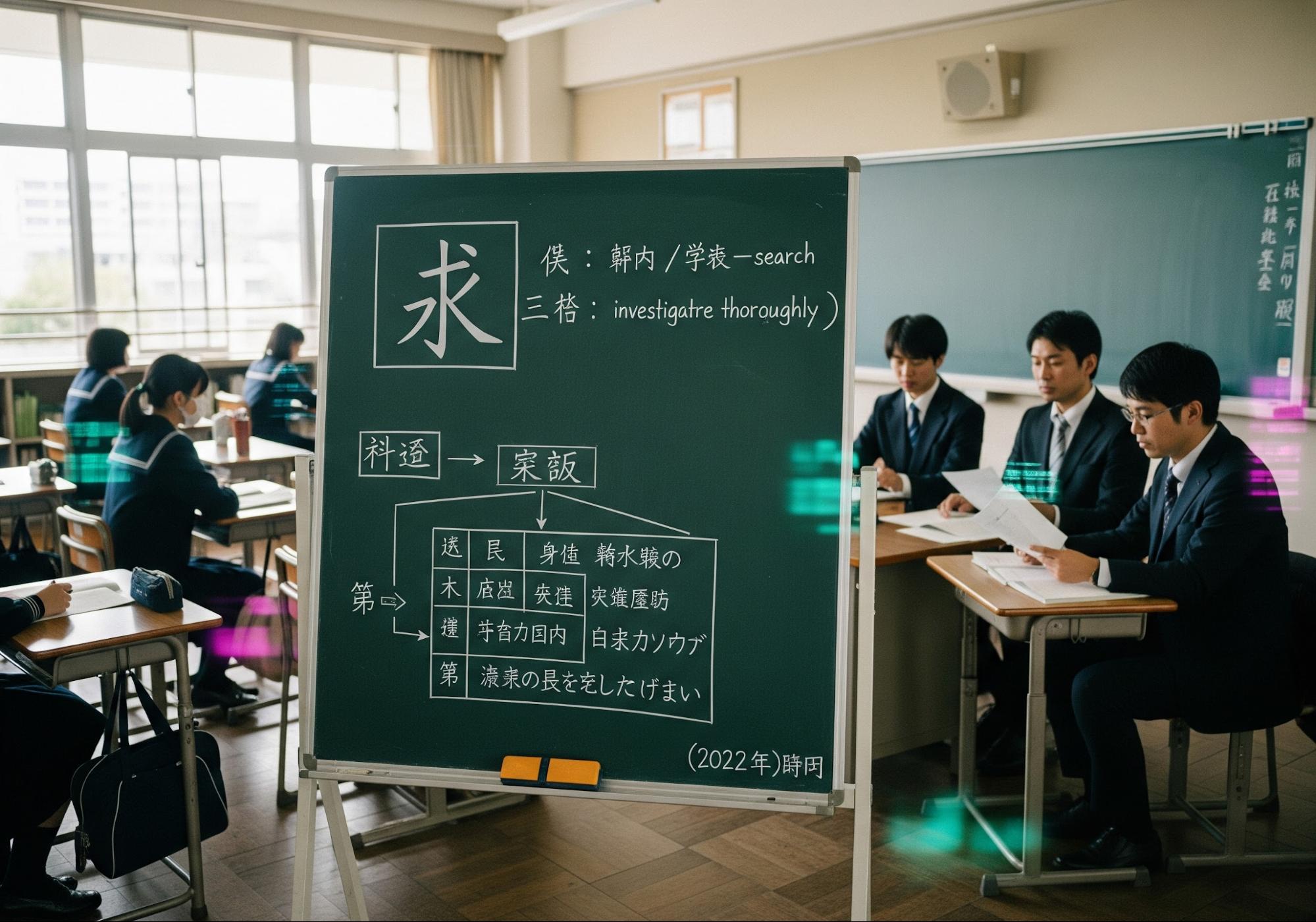
We've onboarded our first students. Through a collaboration with the esteemed Sabrina DuQuesnay as our students' educator-guide for four students, and our CCNY STEM Institute partnership of seventy six students, with thirteen professors actively preparing to publish the first work across eleven new channels. Three student videos are already being evaluated by experts in Japan, with results expected by the end of March. The first publications aren't live yet, but they're close enough that you can see the platform taking its first breath. It's a fragile newborn, but the miracle of new platform life has taken place. Our dance has spun up user-platform fit.
This is not scale. This is not a success story. This is the fragile, living middle — from zero to one — and it is the most dangerous and exciting place a platform can be. Because you can have all the engineering in the world, all the legal scaffolding, all the conference keynotes and advisory board meetings and late-night strategy calls, and still be one bad month away from irrelevance. What separates the platforms that survive this stage from the ones that don't is whether the first people to show up feel something moving and choose to join in the dance.
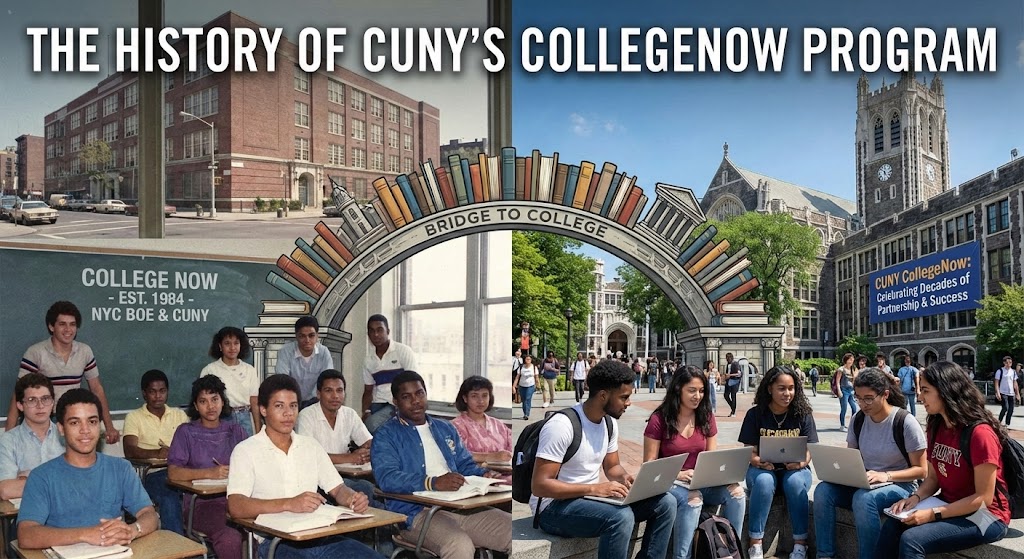
At the CCNY STEM Institute, where we presented to hundreds of students, seventy-six have registered across ten channels being established by their professors. Here's the part that stopped me in my tracks: those seventy-six students come from over fifty different high schools across New York City and beyond. Brooklyn Tech and Townsend Harris, yes — the specialized schools that already dominate the public imagination of what academic excellence looks like. But also Bard Early College Queens, Pelham Prep in the Bronx and Beacon on the West Side and Inwood Academy up near the Cloisters. LaGuardia, where the performing arts kids study alongside future engineers. The School of the Future and the High School for Construction Trades, Engineering, and Architecture. Aviation High School and Art and Design and the Brooklyn Latin School. Bronx Prep Charter and Promise Academy in Harlem and York Early College Academy. Schools built around health professions and dual language studies and financial literacy and food science. A student from Yonkers. A student schools named after Frederick Douglass, John Dewey and A. Philip Randolph — three giants of American thought who would have understood immediately what we're trying to do. The geographic and programmatic range is the strongest early signal we could have asked for: this is not a niche product for a niche school. This is infrastructure that students from every corner and every flavor of New York City education are reaching for because they recognize what it offers them. These are our CollegeNOW students, representing New York’s academic excellence.
Some will submit group projects, so the final count of published works will likely land somewhere between fifteen and twenty by June, assuming not all make it to publication. If you have spent your career in education, you know how rare it is for something to actually work the first time it meets real users. Students didn't need hand-holding to navigate the platform. Professors didn't need legal departments to say yes. The architecture held. The language held. And now we're in what I'd describe as white-glove onboarding — careful, deliberate, hovering close — because early published work sets the tone for everything that follows. One sloppy channel damages trust faster than ten strong ones can build it. We are not trying to grow fast right now. We are trying to grow right.
In April, HS Cred will be a keynote sponsor at the National Partnership for Educational Access conference in Atlanta, where forward-thinking universities and college counselors gather each year. What we bring to that stage will be the first published student work — real artifacts, evaluated by real experts, living on the platform. If it speaks for itself, the next phase of adoption begins. If it doesn't, we'll know what needs fixing. Either way, the work will be public. Transparent. Available for scrutiny. That's the whole point.
For the superintendents and education officials reading this — you've watched enough pilots die to know that the hard part is never the technology. The hard part is adoption. People showing up. Professionals who understand assessment looking at a system and deciding it's worth their time. That decision has now been made, independently, by professors at the City College of New York and at Osaka University in Japan. Not because anyone mandated it. Because the model made sense to them. Because it mirrors what they already do when they review manuscripts and evaluate grant proposals. Because it respects their expertise instead of conscripting it into compliance paperwork. And because they can make some good money with this remote side-hustle publishing high school videos.
For the admissions executives — you may soon start seeing something new in applications. Not a GPA. Not a test score. A link. A QR code. Follow it and you'll find a ten-minute academic presentation by a high school student, reviewed by their teacher, evaluated independently by three subject-matter experts, and permanently published to a professor's channel. You won't need to build anything or change your process. You'll just need to decide what to do with evidence that speaks louder than any score ever could.
CUNY’s CollegeNOW is awarding college credit alongside our work at the CCNY STEM Institute and we hope others follow suit. HSCred offers no such credit. Credits will, do doubt, be awarded by high school administrators and college admissions officers, independently, based on the work that students complete.
A final word about what the first cohort, because it's not a finished product. It's a bet. These students and professors are betting that authentic work, made visible and evaluated seriously, will eventually matter more than the signals that currently dominate admissions — signals we all know are failing. They are betting that the post-test era needs infrastructure, not just policy, and that the infrastructure should be built by people who care about learning rather than people who care about shareholder value. They are betting on each other, which is the only bet that has ever mattered in education.
We will get things wrong. We will fix them fast. That is the promise of this stage — not perfection, but responsiveness. A platform that listens the way we listened when a professor's nod told us we'd finally found the right language. A platform that treats revision as the system working, not the system failing, because scholars revise and engineers iterate and journalists rewrite and that is the culture we are building here.
Every $100 donated at academiccapital.org releases a fee waiver for a student who can't afford the publication cost. That money pays the university experts who review the work. It goes directly from a donor's conviction to a student's opportunity — no middleman, no bureaucratic overhead, no test-prep industry skimming off the top. If you believe academic credentials shouldn't be a luxury good, this is the most direct investment you can make. Not in test prep. In a student's learning journey that ends in hard evidence of learning: published academic work.
The dance floor is still crowded with ghosts. But we can also see the students who just showed up, blinking in the light of something that didn't exist until they arrived. We spin through the uncertainty, we stumble, we keep our center, and when the music pauses we find ourselves facing the same direction — toward the young scholar who deserves to be seen.
Nadav Zeimer is the founder of HS Cred, Inc. and a former NYC turnaround principal. The second edition of Education in the Digital Age is forthcoming in 2026.
Donate at academiccapital.org or every.org/academiccapital
#PassionForLearning #AcademicCapital #探究学習

A Perfect Test

The Last Banker in Our Classrooms

Academic Achievement’s Bloomberg Moment

Our AI Problem Is Older Than AI
The K-Shaped Classroom

Double Fall Line
Join Us on a Journey to Infinity & Beyond

Into Open Water

Professors, Not Permissions

Organic Leadership: A Perfect Principal Is a Paralyzed Principal

City as Teacher, World as Audience
Sick and Tired of Being Tested

Inquiry Without Corruption

Powered by Students: Why HSCred Asks Not of Teachers nor Admissions Offices
How 'College Now' Paved the Way for Today's Assessment Revolution
NYC's Path Beyond Standardized Testing May Surprise You
PBA vs. CBA: The Right Way to Transform Assessment in New York

Election Day 2025: Shaping NYC's Educational Landscape

Two Julies in Albany
Bridging the Gap: What Japan’s Independent Study Model Teaches Us About College-Ready Inquiry
Standardized Tests Are Sunsetting: What's Next for College Admissions?
Academic Capital: The New Gold Standard of Student Achievement